
Zenit Auto: una plataforma mayorista de recambios construida en torno a encontrar la pieza correcta
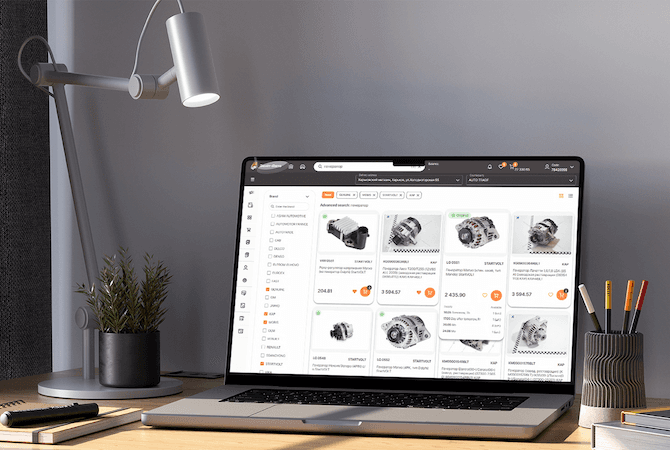
Una plataforma B2B de recambios de automóvil donde un distribuidor encuentra una pieza por referencia, por referencia cruzada o por el vehículo al que corresponde, ve en qué día puede llegar realmente cada artículo, y obtiene su propio descuento negociado aplicado antes de finalizar el pedido.
El desafío
Los recambios de automóvil al por mayor son antes un problema de búsqueda que un problema de compra. Un distribuidor llega conociendo una referencia, una referencia de otro fabricante que la sustituye, o nada más que el coche que tiene delante. Si alguno de esos caminos no lleva a la pieza, llama al departamento comercial y la plataforma no ha cumplido su función.
Las propias referencias oponen resistencia. La misma pieza se escribe con apóstrofos, espacios, guiones o sin ninguno de ellos, en varias formas, y la teclea alguien con prisa y las manos manchadas de aceite.
La tarificación tampoco es una simple lista de precios. Cada cliente tiene sus propias condiciones negociadas, y a eso se suman acuerdos de marca, umbrales de volumen, promociones semanales y bonificaciones que solo se activan cuando varias condiciones coinciden a la vez.
Luego está la entrega. Un pedido al por mayor rara vez llega de una sola vez: algunos artículos están disponibles hoy, otros en dos días, y el comprador quiere repartirlos en varias fechas y enviarlos al almacén que corresponda de entre los suyos, cada uno con sus propios horarios de recepción.
La solución
Siete formas de entrar en el catálogo
La búsqueda funciona por nombre con análisis morfológico, de modo que una forma distinta de la palabra igualmente encuentra la pieza, y elimina apóstrofos, espacios sobrantes y puntuación extraña antes de comparar. Además busca por referencia, por referencia y marca combinadas, por referencia cruzada, y por referencia cruzada y marca. El autocompletado funciona en todos estos ejes a la vez, de modo que un número a medio escribir ya reduce la lista.
Encontrarla a través del vehículo
Para un comprador que tiene el vehículo pero no la referencia, la plataforma está integrada con el catálogo TecDoc. Elige el modelo y obtiene las piezas que le corresponden, sin tener que traducir antes el vehículo a una referencia.
Los descuentos como un servicio propio
La lógica de descuentos funciona como un microservicio independiente en lugar de como simples campos de un producto. Las reglas se aplican por cliente, por producto, por marca o según la propia forma del pedido, ya sea el número de artículos o el valor total. Gestiona ofertas semanales sobre artículos seleccionados, bonificaciones que se activan cuando un pedido cumple ciertos criterios, y reglas compuestas donde varias condiciones deben cumplirse a la vez antes de que se aplique el descuento.
Un carrito que conoce las fechas
Añadir un artículo abre una ventana que muestra las fechas de entrega disponibles, para que el comprador elija las cantidades por fecha sin salir del catálogo. Un mismo carrito puede contener artículos destinados a fechas distintas, las cantidades se editan sobre la marcha, y un comprador que gestiona varios pedidos a la vez mantiene varios carritos en paralelo.
Avisado cuando algo cambia
El stock, la cantidad y el precio cambian entre que se añade un artículo y se realiza el pedido. La plataforma avisa al comprador cuando eso ocurre, y todo lo que ya no se puede pedir pasa a su propia sección en lugar de fallar en silencio al finalizar la compra.
Disponibilidad por día, en el propio catálogo
El catálogo muestra cuántas unidades hay disponibles hoy, mañana, pasado mañana y más adelante. El comprador planifica su pedido sobre fechas reales mientras navega, en lugar de descubrir el plazo al final.
Direcciones que se ajustan a cómo trabaja un distribuidor
Cada cliente dispone de tantas direcciones de entrega como necesite, cada una con su ubicación de almacén, tipo de entrega y horarios de recepción. El pedido llega adonde debe y cuando hay alguien para recibirlo.
Estado por artículo, no solo por pedido
Los pedidos se siguen a través de sus fases, y también cada línea que los compone. Un comprador ve qué partes de un pedido mixto han avanzado y cuáles no, sin tener que preguntar a nadie.