
Samange: un único catálogo de moda que vende en cuatro países, al por mayor y al por menor
Una tienda boutique de ropa y accesorios que gestiona B2B y B2C desde el mismo catálogo, en seis versiones de idioma en cuatro mercados, con unas 6 000 fichas de producto donde cada modelo tiene sus propios colores y tallas.
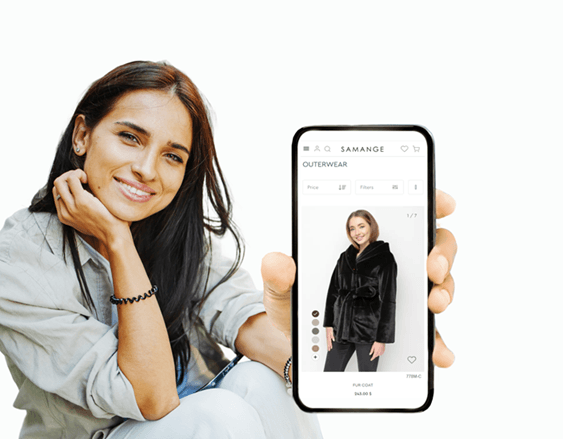
El desafío
Vender ropa boutique en cuatro países no es un único escaparate traducido cuatro veces. Cada mercado tiene su propia moneda y su propio precio, y un cliente ucraniano puede querer el sitio en ucraniano, ruso o inglés, mientras que uno polaco solo quiere polaco.
El catálogo lo complica todavía más. Unas 6 000 fichas de producto se reparten en 37 categorías entre prendas de abrigo, ropa, calzado y accesorios, y un mismo modelo existe en varios colores, cada uno con sus propias tallas y su propio stock. Un abrigo en bronce y ese mismo abrigo en dorado son dos cosas distintas que comprar, pero una sola que exhibir.
Además, ese mismo catálogo tiene que servir a dos tipos de comprador. Las cuentas mayoristas y los clientes minoristas quieren precios y un proceso de compra distintos, pero nadie quiere mantener dos tiendas.
La solución
Un catálogo, seis escaparates
El sitio gestiona seis versiones de idioma en cuatro mercados: ucraniano, ruso e inglés para Ucrania, y luego polaco, rumano y checo. Cada una tiene su propia ruta de URL, su propio catálogo traducido, su propia moneda y sus propios precios, y todas leen de un único catálogo de productos en lugar de copias que acaban divergiendo.
Colores y tallas como variantes reales
Una ficha de producto es un modelo en un color, con su propia dirección, sus propias fotografías y su propio stock. Las tallas están dentro de ella. El cliente cambia de color sin perder su lugar, y la tienda registra la disponibilidad por variante en lugar de por modelo.
Mayorista y minorista lado a lado
Los compradores B2B tienen su propio punto de entrada y sus propias condiciones mientras navegan por el mismo catálogo que los clientes minoristas. Una sola gama de productos, un solo set fotográfico, dos formas de comprar.
Merchandising, no solo una cuadrícula
Lookbooks, colecciones de temporada y escaparates promocionales cuentan la historia de la marca en las mismas páginas que venden. Una lista de deseos permite a los clientes guardar las prendas que están decidiendo, y el uso compartido en redes sociales pone un look ante personas que nunca abrieron el catálogo.